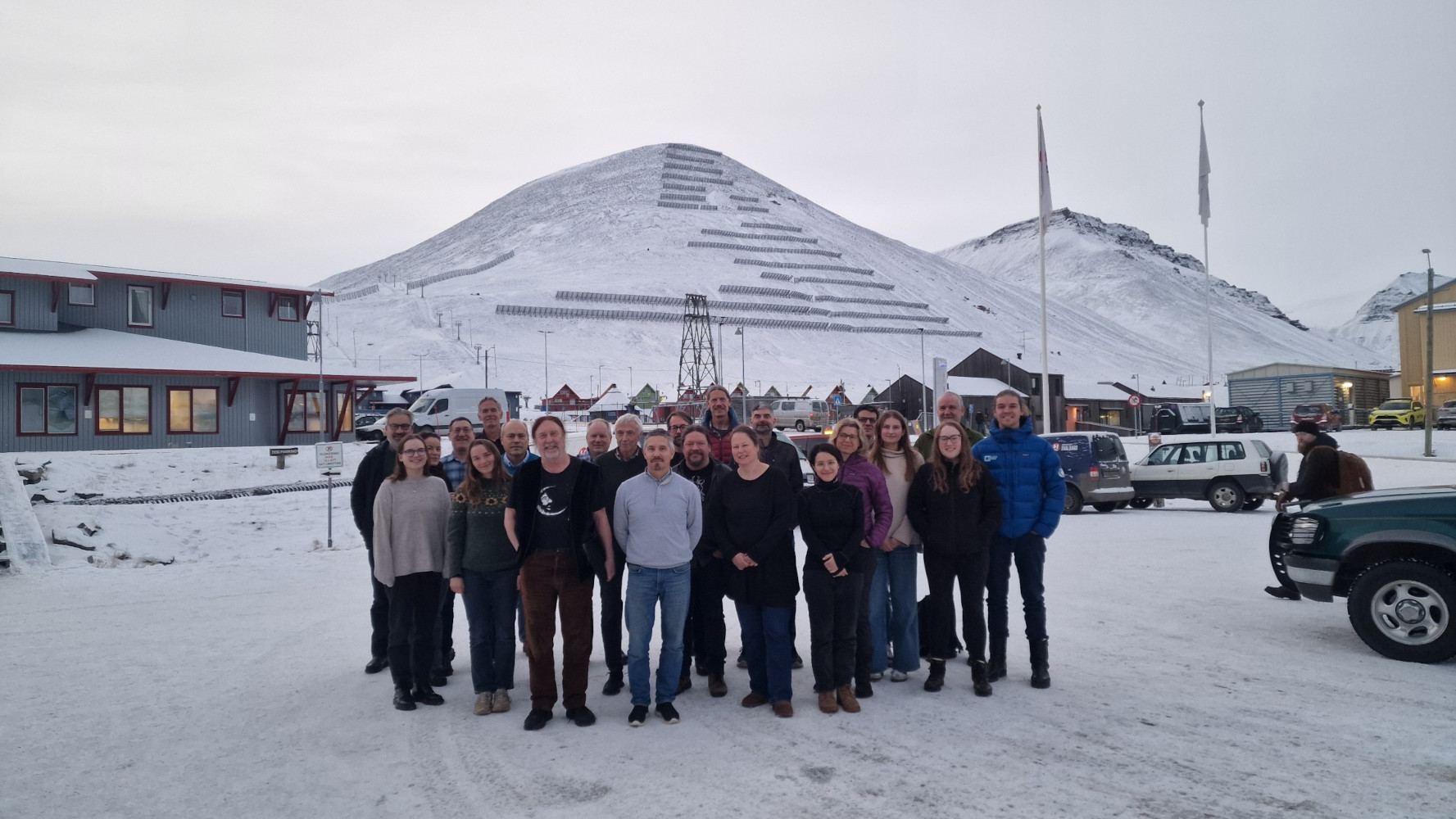

Recently, EORC researches and partners participated in the SvalbardMonitoring workshop, a four-day event organized by the Norwegian Institute for Nature Research (NINA) in Longyearbyen, Svalbard. The workshop focused on Arctic vegetation and biomass research, with a methodological emphasis on remote sensing as a critical technique to acquire environmental data. Sessions covered long-term vegetation dynamics, phenology and vegetation growth, ecosystem modelling, Arctic greening and browning, field-based monitoring systems, links to herbivorous wildlife ecology, and cryosphere-snow-vegetation interactions.
The workshop allowed exchange on the newest research and developments in the field among participants from various research backgrounds and home institutions, including Aarhus University, Alaska Pacific University, Alfred Wegener Institute (AWI), Austrian Polar Research Institute, Cambridge University, Centre for Ecological Research and Forestry Applications (CREAF), NINA, NORCE, Norwegian Polar Institute, Sheffield University, University Centre in Svalbard (UNIS), University of Eastern Finland, University of Iceland, University of Lapland, University of North Arizona, University of Oslo, University of Tromsø, University of Virginia and University of Würzburg.
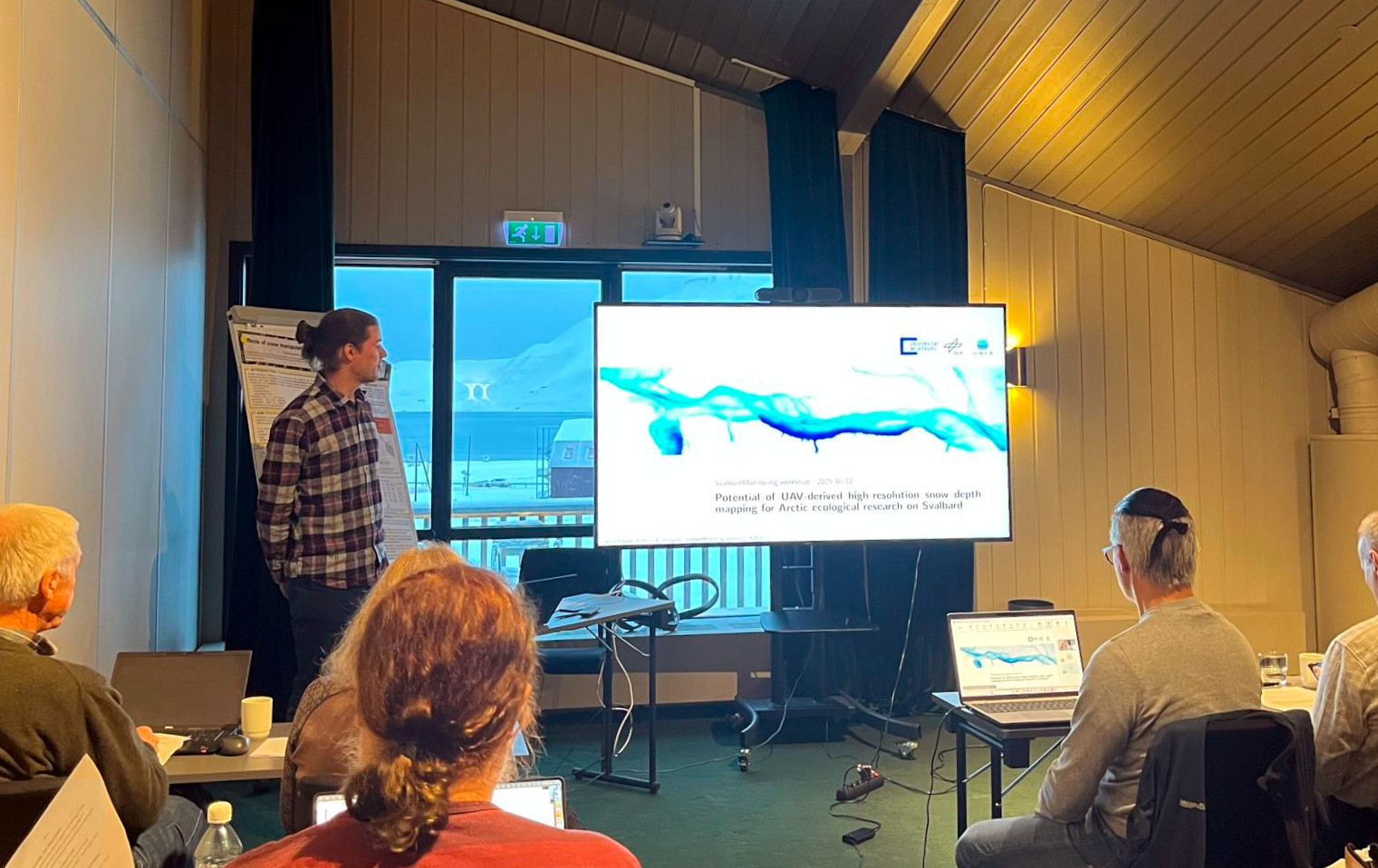
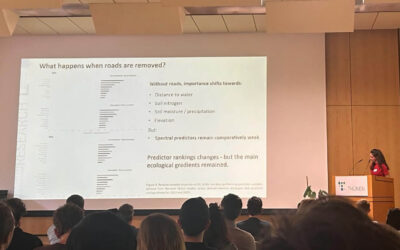
EORC researcher Dr. Jakob Schwalb-Willmann presented research on behalf of a team of co-authors from University of Würzburg, the German Aerospace Center (DLR) and UNIS on the potential of UAV-LiDAR-derived cm-resolution snow depth mapping for analysing snow-ecosystem interactions on Svalbard (https://hdl.handle.net/11250/5276447). In his talk, he showed a new snow depth product with a spatial resolution of 2.5 cm and high spatial precision that EORC and UNIS had created and validated this year at two research sites on Svalbard using a LiDAR-equipped Verticle Take-off and Landing (VTOL) UAV. This research has been conducted in close cooperation between our UNIS colleagues Assoc. Prof. Dr. Larissa Beumer and Assoc. Prof. Dr. Simone Lang, and EORC researchers Dr. Mirjana Bevanda, Antonio José Castañeda-Gómez, Elio Rauth and Dr. Jakob Schwalb-Willmann.
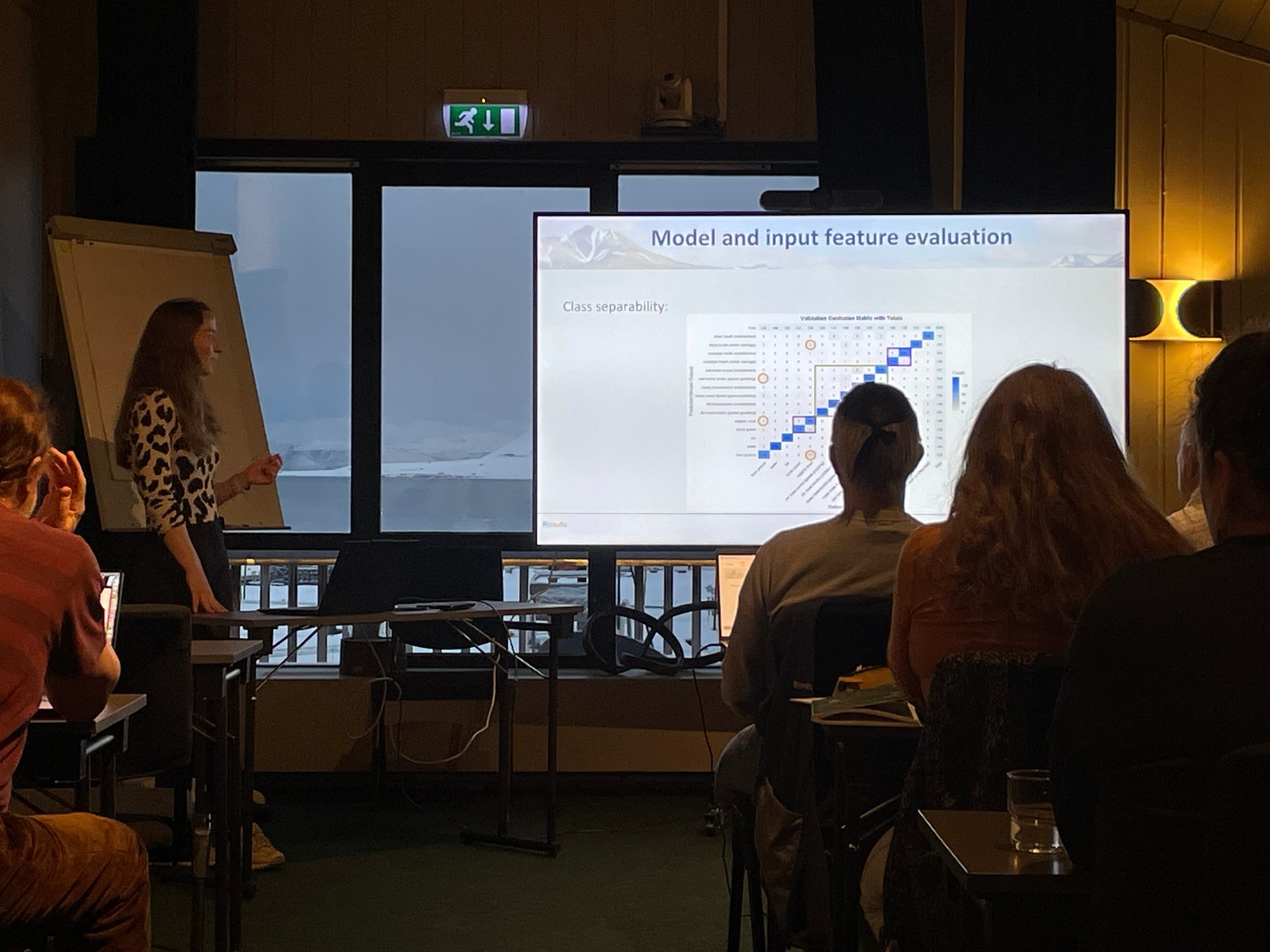
EAGLE MSc. student Ronja Seitz presented work from her Master thesis on quantifying plant functional groups and disturbances of Tundra vegetation in the High Arctic using high-resolution UAV time series data, for which she had collected optical UAV data and in situ vegetation data on a weekly basis for a full vegetation period in her research area on Svalbard (https://hdl.handle.net/11250/5276448). Among other results, Ronja showed a UAV-derived multi-temporal vegetation cover classification for her research area. Her work has been jointly supervised by Dr. Mirjana Bevanda (EORC) and Assoc. Prof. Dr. Larissa Beumer (UNIS).
We are thankful for the invitation to the SvalbardMonitoring workshop and are looking forward to continuing our collaborative research efforts at the interface of remote sensing and Arctic ecology/ecosystem research in the coming year!