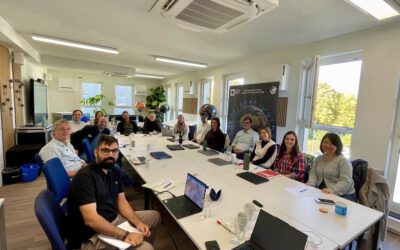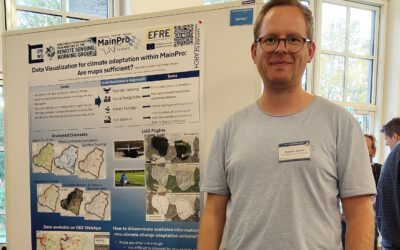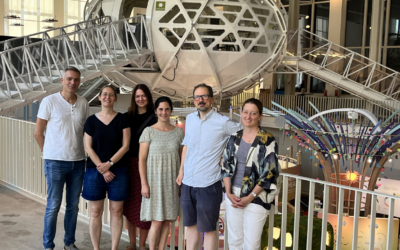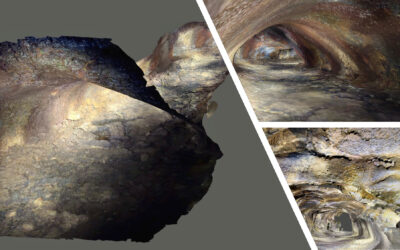


Since mid of September, a team from the Earth Observation Research Cluster is on a field expedition at the Naryn River in Kyrgyzstan. The team is acquiring data on vegetation and hydro-geomorphic features for the DFG funded “FluBig” project which is dedicated to research on the interaction of hydromorphology and vegetation across multiple scales. Along with Dr. Florian Betz as PI and Baturalp Arisoy as PhD student, also the two EAGLES Leonie Sonntag and Elin Gerdes have joined the expedition to collect data for their master theses. Within the project, we are developing state-of-the-art remote sensing approaches for mapping entire river networks at unprecented spatial and temporal details to better understand how the feedbacks between vegetation and hydromorphology shape riverine landscapes. For this, we leverage UAV data, deep learning based super-resolution Sentinel imagery, and historic spy satellite images which are a great source of information to analyze long-term trajectories of river development.

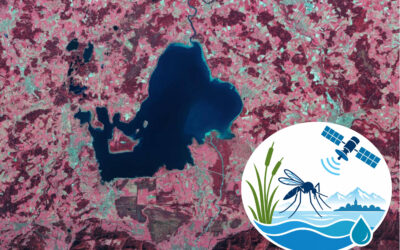
AQUAMOS: New Project on Mosquito Breeding Habitats and Early-Warning Systems
In October 2026, the EORC launched AQUAMOS: “AQUAtic Breeding Habitats and Early MOSquito Warning Systems Using Remote Sensing and Environmental Monitoring”. The pilot project aims to develop a monitoring and early-warning approach for the formation of temporary water...