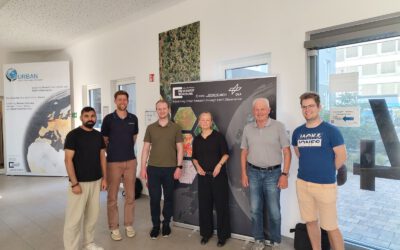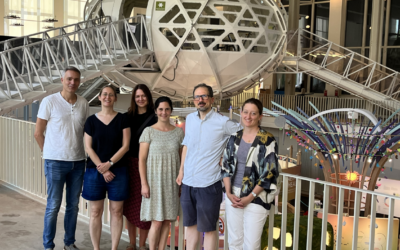

The Mainfranken region took another exciting step toward shaping its role in the future of space technologies at this week’s IHK meeting on “Allianz New Space Mainfranken” in Würzburg. The event brought together representatives from politics, academia, and industry to highlight the growing importance of space-based innovation for regional development.
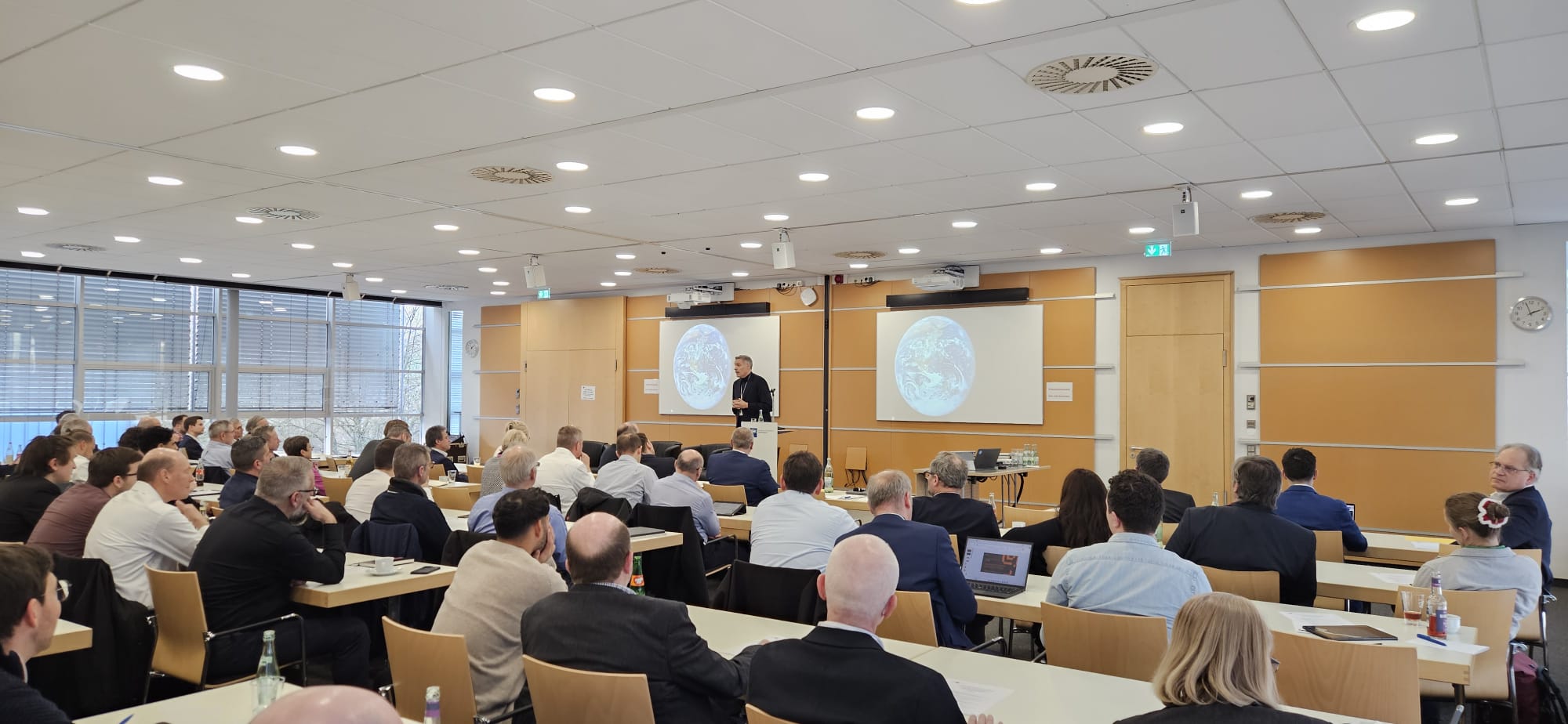
After warm welcome notes from the Federal Minister of Research, Technology and Space, Dorothee Bär, our vice-president of JMU Prof. Matthias Bode, and IHK presidents Carolin Trips and Dr. Stefan Möhringer, our Head of the Department for Global Urbanization and Remote Sensing, Prof. Hannes Taubenböck, took the stage for his keynote presentation.
In an inspiring talk, Prof. Taubenböck offered a glimpse into the increasing potential of Earth observation for industry and society. He highlighted how satellite-based analyses are becoming essential tools across sectors.
A special focus was placed on the growing ecosystem emerging from our research environment in Würzburg. Spin-offs such as Topodat and Supervision.Earth demonstrate how innovative ideas can evolve into impactful applications, bridging the gap between cutting-edge science and real-world demand. Prof. Taubenböck also provided a forward-looking perspective on what further opportunities might arise as Earth observation research continues to advance in the region.
Following his keynote, additional presentations like from LeoSpace GmbH, the ESA Business Incubation network, and THWS showcased how the Mainfranken region is increasingly positioning itself as a dynamic hub for New Space activities. Their contributions underscored the broad range of expertise and entrepreneurial spirit that make the region well-suited for future space technologies.
The event made one thing clear: Mainfranken is on a promising trajectory. With a strong collaborative network and a growing number of pioneering ideas, the region is well-prepared to play a leading role in shaping the future of space-driven innovation.