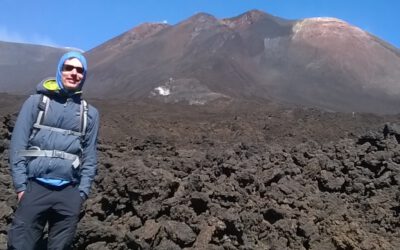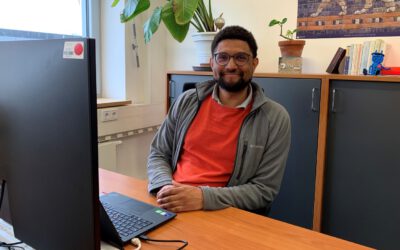
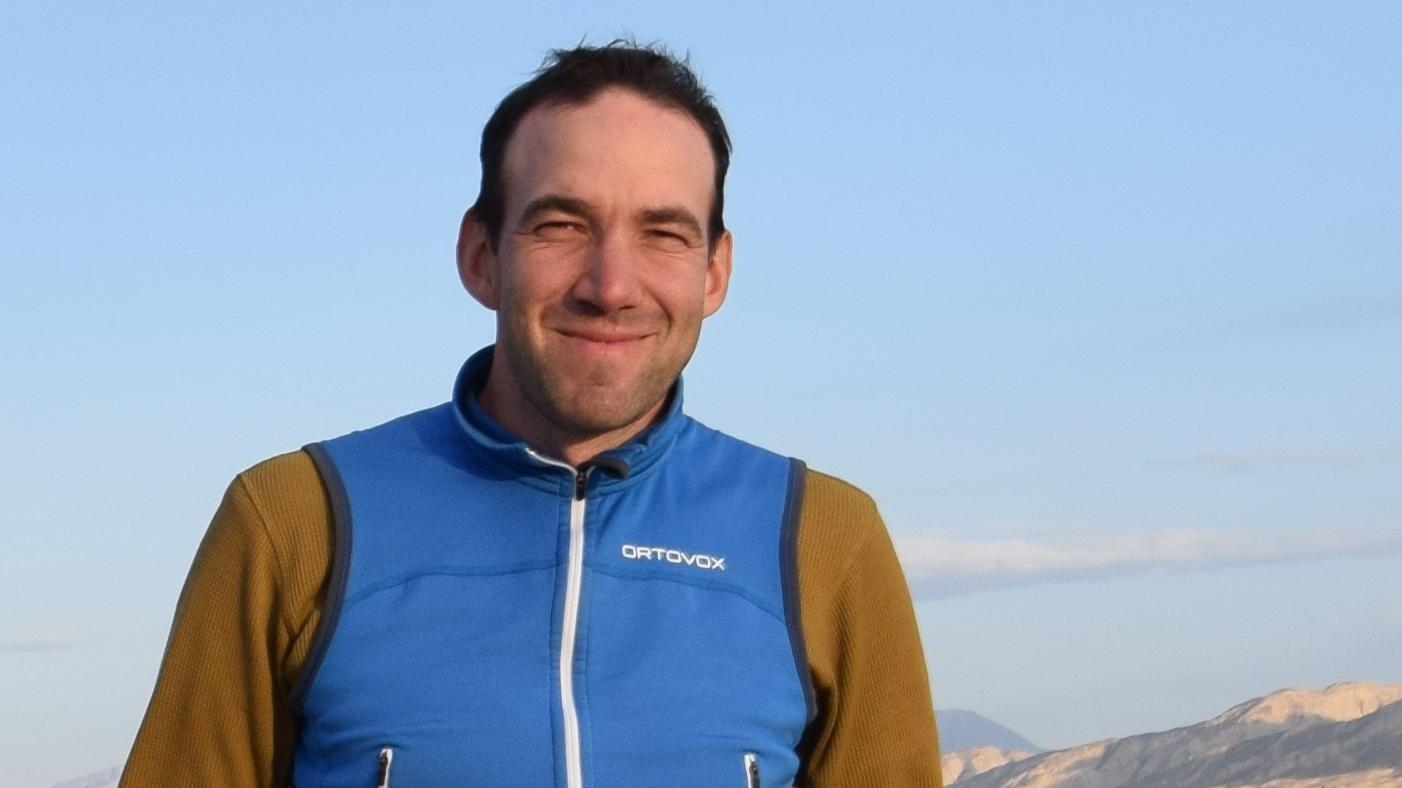

If you’ve spent any time around EORC, you’ve probably crossed paths with Florian at some point, maybe standing knee deep in a riverbed somewhere in Central Asia, or deep in conversation about river dynamics. Florian is a Principal Investigator at the Earth Observation Research Cluster, and his work sits right at the intersection of biogeomorphology, river science and remote sensing. But what doesn’t always make it into the publication list is just how much teaching and capacity building runs through his career, almost as a parallel thread to the research itself.
It actually goes back to his PhD. While he was doing his own research on rivers and floodplains in Central Asia, he was also running trainings for students from local partner institutions in Kyrgyzstan, covering vegetation mapping, statistics, GIS, the whole toolkit. That’s not a small thing to take on during a PhD, but it set the tone for how he’d keep working afterwards. Throughout his postdoc years he stayed closely engaged with water and (floodplain) forestry management stakeholders and local riverside communities, not just publishing results but actually bringing them to the people who’d use them. This work at the interface of fundamental research and science-policy integration has basically become a signature of his.
Fast forward to today, and that same instinct shows up in his teaching at EAGLE and beyond. He is involved in CHARM-EU, the European university alliance, being member of the knowledge creation team of the water track and running workshops and lectures with the water track master’s students in Montpellier on using earth observation for hydrology. And of course there’s the day to day EAGLE supervision too. Florian is regularly out in the field with students, whether that’s the FluBig fieldwork or any other ongoing river research. It’s the same pattern as back in his PhD days: take students out of the lecture hall and put them in a position where they’re actually doing the science, not just hearing about it.
If there’s one thing that ties his teaching together, it’s that he treats education and capacity building as part of the research, not a side project to it. Training local students in Kyrgyzstan, teaching students in Würzburg and beyond in the EAGLE and CHARM-EU master programs, supervising EAGLE students in the field, it’s all variations on the same idea: knowledge only really matters once people can use it themselves.