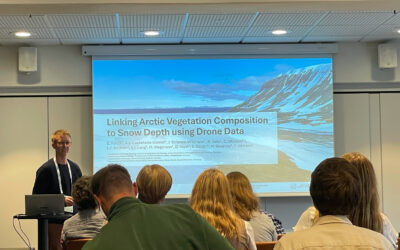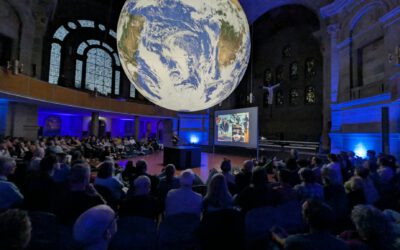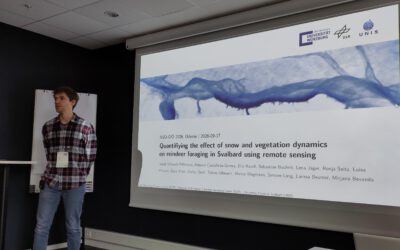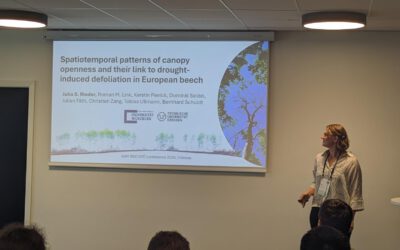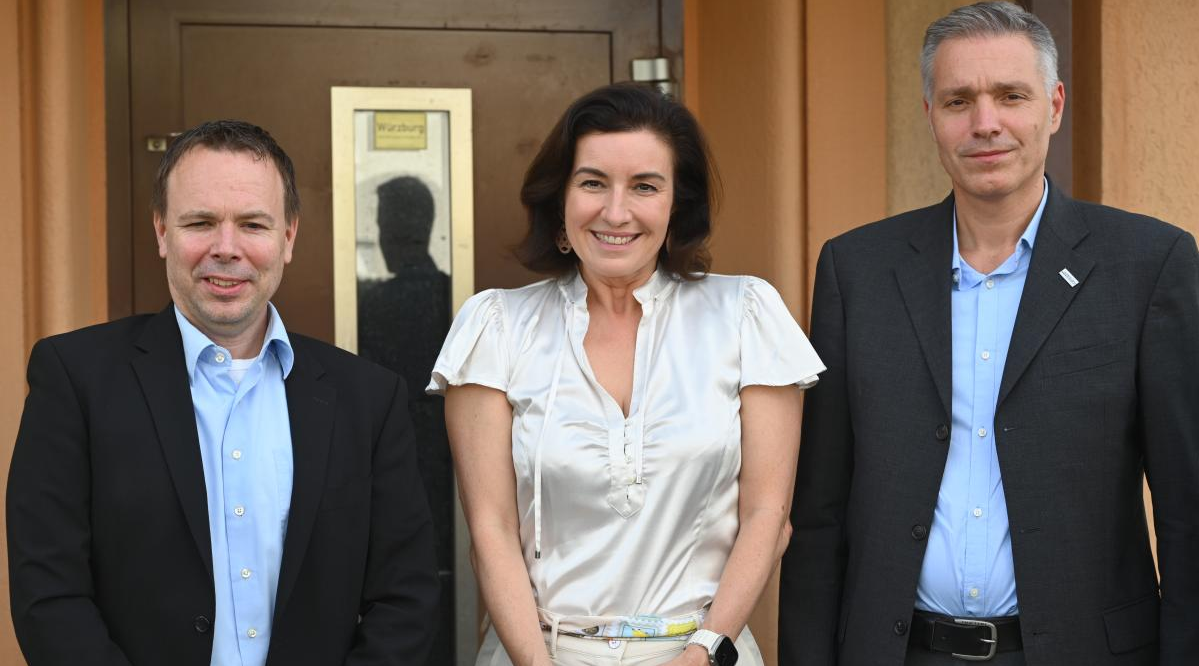

We had a really special visit at the University of Würzburg on July 16: Germany’s Federal Minister for Research, Technology and Space, Dorothee Bär, came to the Mission Control Center on Campus Hubland Nord by the Informatics Faculty, and we were glad to be part of the day.
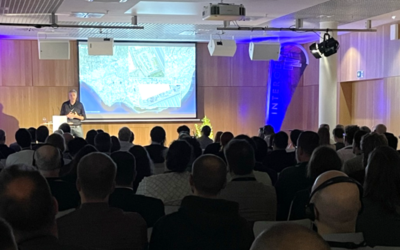
The visit was organized around a talk Dorothee Bär gave to the general assembly of the IHK Würzburg-Schweinfurt on what research, technology, and space can do for the Mainfranken region. Fittingly, the whole thing happened right in the Mission Control Center run by Hakan Kayal, professor for space technology at the Institute of Computer Science. Dorothee Bär even got to send live commands to SONATE-2, the nanosatellite Kayal’s team put into orbit via a SpaceX launch back in 2024, which by the way was the first time Germany trained an AI on board a satellite in space.
Prof. Marco Schmidt – our collaboration partner e.g. in the Super-Test-Site Würzburg project – presented his group’s work on embedded systems and sensors for earth observation, everything from small satellite design to networked sensor systems to new ways of processing huge remote sensing datasets efficiently. His newest project is a camera payload for small satellites that lets you run AI processing directly in orbit and reconfigure the hardware on the fly, so the mission can adapt to changing requirements without waiting for a trip back to the drawing board.
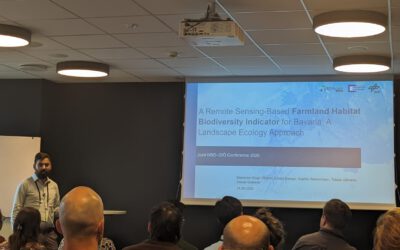
And then it was our Earth Observation Research Cluster (EORC) and German Aerospace Center (DLR) turn. Prof. Hannes Taubenböck introduced the relevance of the sensors flying on satellites like these for the kind of analysis we actually do with the data once it comes down: spotting georisks and natural hazards early, tracking urban dynamics as cities grow, keeping an eye on climate-related shifts, even reading geopolitical tension through remote sensing. He made the case that earth observation, as an information technology, still has a lot of runway ahead of it, technically, methodically and thematically.
Getting the chance to present our work directly to the minister responsible for the federal research budget was a genuine highlight. Dorothee Bär mentioned that the 2027 federal budget draft holds a stable 21.9 billion euros for research, technology, and space, and that regions like Mainfranken, strong in fields like robotics, quantum physics, and life sciences, stand to benefit from that. Hearing satellite hardware, sensor design, and earth observation research all discussed in the same room, with the person who actually funds it standing right there, is not something that happens every day.
We’re proud of our colleagues in informatics for pulling this together, and grateful for the chance to show how our earth observation work fits into the bigger picture of what Würzburg is building in space and remote sensing research.
You can read the university’s own writeup of the visit, with more photos and background, here: Bundesforschungsministerin Dorothee Bär zu Gast
and an IHK post here: https://www.linkedin.com/posts/ihk-w-rzburg-schweinfurt_hoher-besuch-bei-der-ihk-vollversammlung-activity-7483828747167715328-edBl