
MSc handed in on object-oriented classification of historical maps for ecosystem services

MSc handed in on object-oriented classification of historical maps for ecosystem services

May 4, 2016

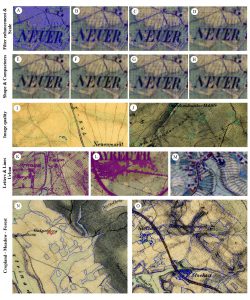
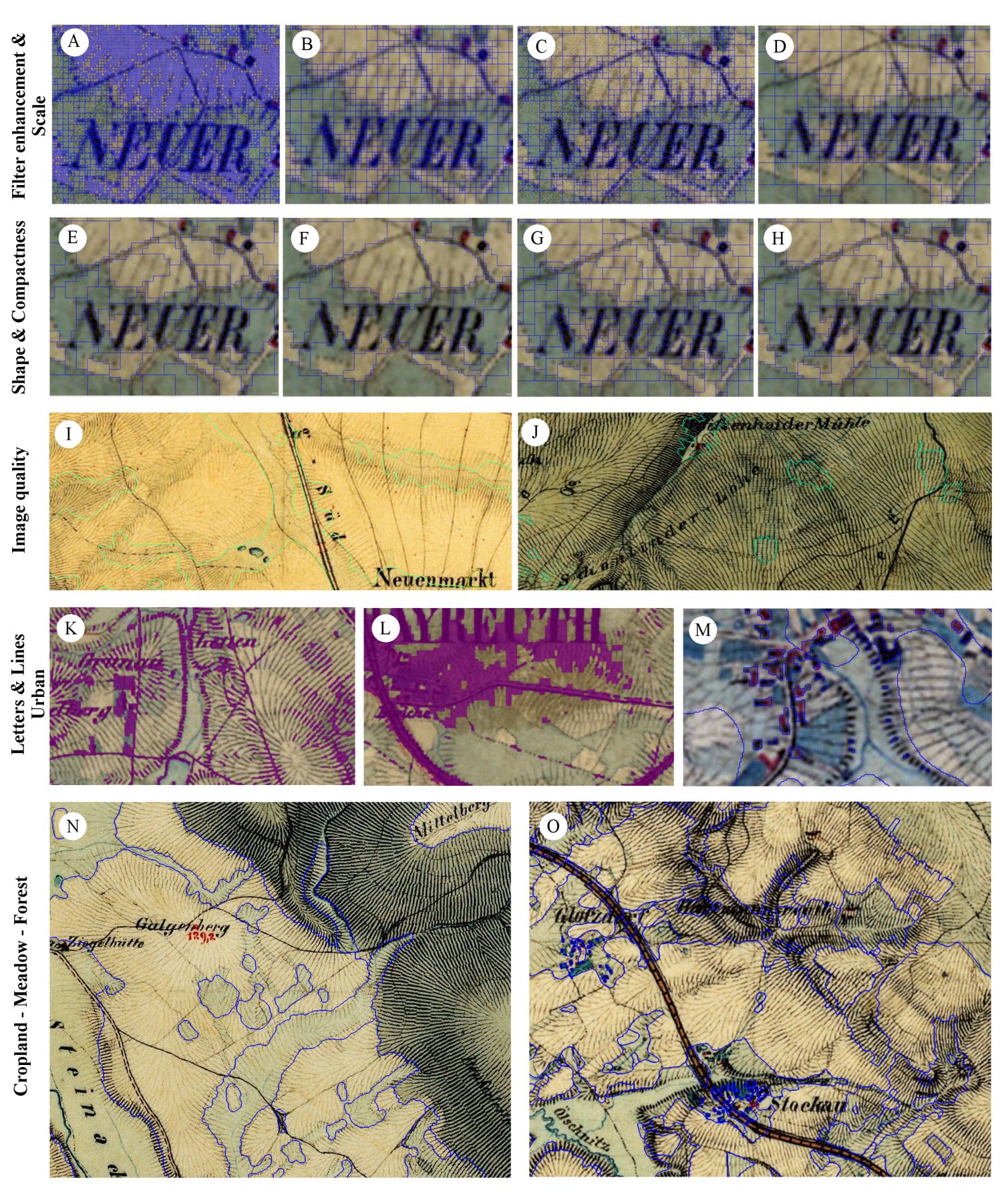
Yrneh_Ulloa_MSc_GCE_2016Yrneh Ulloa handed in her MSc “Land change in the Main catchment with an Object Based approach using eCognition” which dealt with classifying landcover in historical maps (1810+) automatically using object oriented approaches.

The monitoring of land cover and land use change is critical for assessing the provision of ecosystem services. One of the sources for land change quantification is through the classification of historical and/or current maps. This study applied an object based classification using eCognition for analysing the land change in the Main river catchment, Upper Franconia, Germany. It was done in two time steps, 1850s and 1990s. The method has proven useful for the application on historical maps due to the creation of semantic objects. Since the early time step forest and urban areas have expanded while agricultural areas have been reduced due to a shift in agricultural policies. As little research has been done on historical maps using object-based approaches, there is an opportunity to develop methods to assess ecosystem services in the past and present.

follow us and share it on:

you may also like:

Exploring the Power of Orfeo Toolbox

Exploring the Power of Orfeo Toolbox

This week, our Eagle students have been soaring deeper into the world of spatial science with the Orfeo Toolbox (OTB) — a powerful open-source library for remote sensing image processing. Originally developed by the French Space Agency (CNES), OTB offers a rich suite...

Meet EORC at Upcoming Earth Observation Conferences & Workshops

Meet EORC at Upcoming Earth Observation Conferences & Workshops

The coming months offer many opportunities to connect with the Earth Observation (EO) community across a wide range of conferences, workshops, and focused scientific meetings. These events are not only places to present results, but also spaces for open exchange,...

A Strong Base at the Top: Research and Training at Schneefernerhaus

A Strong Base at the Top: Research and Training at Schneefernerhaus

We are grateful for the long-standing and growing opportunity to work with the Schneefernerhaus research station on Zugspitze, Germany’s highest mountain. For our work at the EORC, this collaboration provides an exceptional foundation for research on snow, ice,...

Our students wrote UFS press article

Our students wrote UFS press article

Our students have recently turned their fieldwork at the Environmental Research Station Schneefernerhaus into a published press article, showcasing how hands‑on glacier and snow research becomes part of real scientific communication. Our course at Schneefernerhaus The...

Share This