
New PhD Student Marius Philipp

New PhD Student Marius Philipp

March 4, 2020

In February 2020, Marius started with his PhD at the Department of Remote Sensing. His research focus lies on the potential of earth observation for permafrost monitoring on a global scale. One key aspect of his work will be the detection and quantification of thawing dynamics and their environmental responses. Since permafrost cannot be directly measured with current satellite data, the identification of relevant environmental proxies, as well as the development of suitable algorithms and data combinations are major parts of his work.
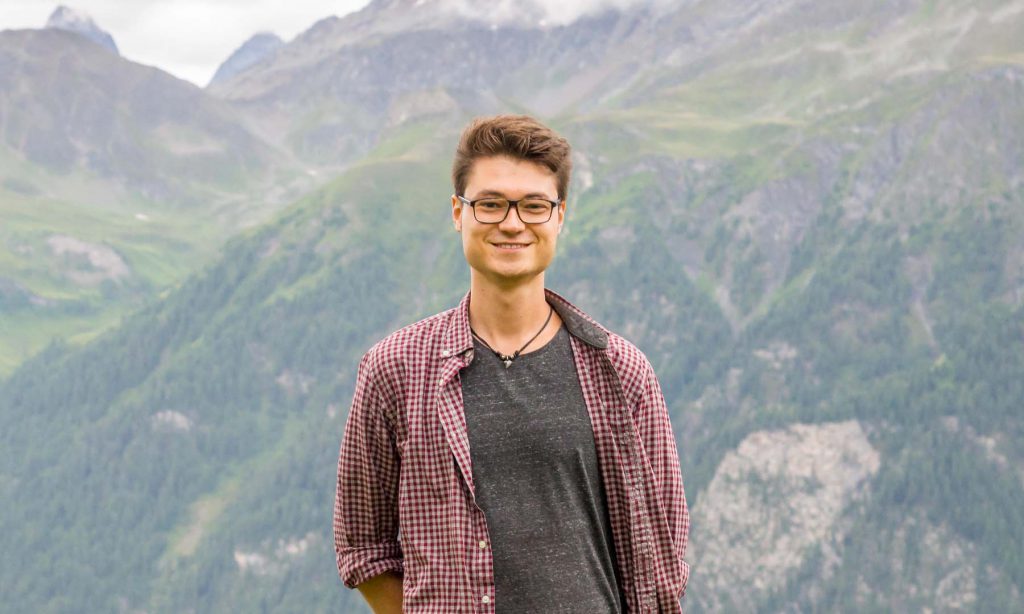
Prior to his PhD, Marius finished his Bachelor’s degree in Physical Geography and Biology. Afterwards, he completed his Master’s studies in the EAGLE study program at the Department of Remote Sensing at the University of Würzburg. He was subsequently employed in the “African Protected Natural Assets” (APNA; funde by BMZ) project at the Department of Remote Sensing.

follow us and share it on:

you may also like:

UrbanPulse in the Mainpost, and invitation to the festivities

UrbanPulse in the Mainpost, and invitation to the festivities

If you open the printed Mainpost today, keep an eye out for the Universitätsbund Würzburg’s invitation to the Festkonzert. Among the topics on the page, there’s one we’re rather proud of: our newly funded project URBAN:Pulse, which will be officially celebrated at the...

Field work for MONID-HABITRACK project

Field work for MONID-HABITRACK project

Today our researchers from the department working on the MONID-HABITRACK project, that is funded by the BMFTR, went to the field to acquire LiDAR, thermal and multispectral data with their drones. Within our department the project is located at the Chair of Remote...

bzgl. Art. 50 Verordnung (EU) 2024/1689 (AI Act):

Überwiegend werden eigene originäre Texte und Bilder des EORC genutzt, jedoch sind einige Inhalte von blog post Texten teilweise mit Hilfe von KI überarbeitet worden und einige Bilder sind ganz mit KI erstellt, die jedoch deutlich keine photorealistische Darstellungen abbilden. Aussnahmen sind KI generierte fernerkundliche Datensätze, die explizit für Forschungszwecke mit KI erstellt wurden, hier wird aber durch den assoziierten Text der wissenschaftliche Grund der KI generierten Bilder erläutert.

Share This