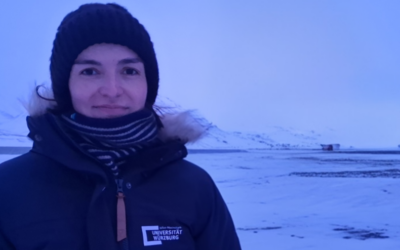
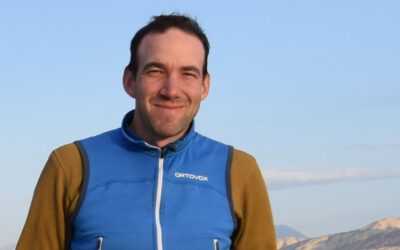
Tamilwai Kolowa is an external doctoral student at our EORC while being at the same time a Junior Researcher at the Federal Institute for Population Research in Wiesbaden. His research explores how urban form and population dynamics interact to shape cities and regions across both European and African contexts. A central thread in his work is the critical examination of dominant narratives about urban and suburban growth, particularly the relationships between suburbanization, density, and sprawl.
Innovative Methods: Remote Sensing and High-Resolution Population Analysis
Tamilwai is involved in projects that leverage remote sensing and Earth Observation (EO) data to analyze demographic change at the neighborhood level. His work is part of the initiative Innovative Remote Sensing for the Federal Administration (IF-Bund), which explores how high-resolution spatial data can overcome the limitations of conventional administrative datasets. By integrating EO-informed classifications of urban and suburban areas, he contributes to more precise and scalable approaches to population monitoring.
Current Research: Urban vs. Suburban Growth in Germany
In his PhD thesis, Tamilwai investigates patterns of urban and suburban population change across Germany. A central research question is whether the country is experiencing predominantly urban or suburban growth. To address this, he compares multiple classification approaches – contrasting traditional administrative definitions with EO-based spatial typologies.
A key contribution of his work lies in leveraging higher spatial resolution data to analyze internal migration. His research provides, for the first time, a comprehensive view of how internal migration flows span the urban–suburban continuum across all German metropolitan regions between 2011 and 2022.
Global Perspective: Rethinking Informality and Urban Sprawl in Sub-Saharan Africa
In his research on cities in Sub-Saharan Africa, Tamilwai examines the widely held assumption that informal settlements inherently contribute to urban sprawl and unsustainable development. Focusing on Tanzanian secondary cities, his work compares street network accessibility between informal and planned areas as a measure of urban compactness beyond population density. The results challenge one-dimensional narratives about informality and highlights the need for more context-sensitive urban policy approaches in Sub-Saharan Africa.
Professional Experience: Urban Development and Climate Consulting
Beyond academia, Tamilwai brings over seven years of professional experience in urban development operations and climate change consulting with the World Bank. His applied work has informed technical assistance on urban expansion in Cameroon, as well as methodologies to identify the share of World Bank climate adaptation and mitigation finance dedicated to cities.