
new publication on biodiversity metrics to measure from Space

new publication on biodiversity metrics to measure from Space

May 14, 2021

Our new Nature Eco Evol article is finally available online. Lead by Andrew Skidmore with an impressive list of great co-authors we stress the importance of earth observation to monitor biodiversity (change) from space in addition to ground based methods. We mainly suggest a set of remote sensing based metrics that can contribute to the biodiversity monitoring system.

read the full article here:

https://www.nature.com/articles/s41559-021-01451-x

follow us and share it on:

you may also like:

Remote Sensing for Germany #2

Remote Sensing for Germany #2

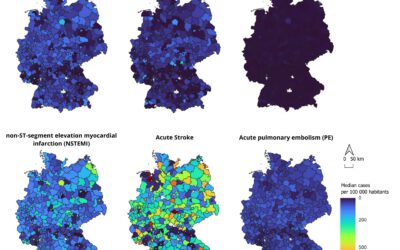
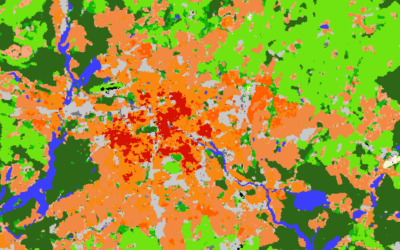
Last year, we gave an overview of our remote sensing work on environmental issues having a special focus on Germany – https://remote-sensing.org/remote-sensing-for-germany-1/ . To follow on from this, we present today a selection of studies on spatial patterns...

Simon Plank gives a talk at GZS-Seminar at EOC of DLR

Simon Plank gives a talk at GZS-Seminar at EOC of DLR

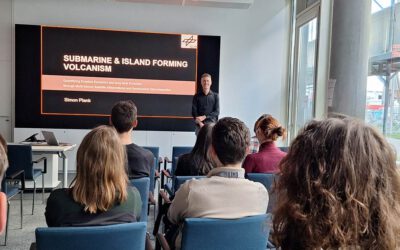
On October 22, our habilitation candidate and guest lecturer from DLR, Dr. Simon Plank gave an inspiring talk at the seminar of the department "Georisks and Civil Security (GZS)" at the Earth Observation Center (EOC) of the German Aerospace Center (DLR). The talk was...

New paper ‘From Spatial to Platial Decision Support’ published

New paper ‘From Spatial to Platial Decision Support’ published

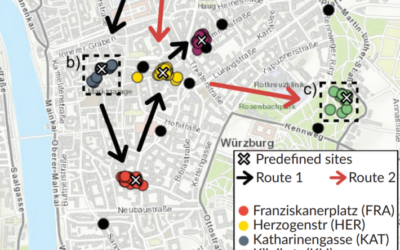
Three  years ago, at the Geolingual Studies Workshop (see here: https://remote-sensing.org/geolingual-studies-workshop-day-1/) researchers from very different disciplines developed ideas to explore how we can better understand the relationship between people and urban...

bzgl. Art. 50 Verordnung (EU) 2024/1689 (AI Act):

Überwiegend werden eigene originäre Texte und Bilder des EORC genutzt, jedoch sind einige Inhalte von blog post Texten teilweise mit Hilfe von KI überarbeitet worden und einige Bilder sind ganz mit KI erstellt, die jedoch deutlich keine photorealistische Darstellungen abbilden. Aussnahmen sind KI generierte fernerkundliche Datensätze, die explizit für Forschungszwecke mit KI erstellt wurden, hier wird aber durch den assoziierten Text der wissenschaftliche Grund der KI generierten Bilder erläutert.

Share This