
UAS field work in the Arctic

UAS field work in the Arctic

m

News | UAV

September 18, 2024

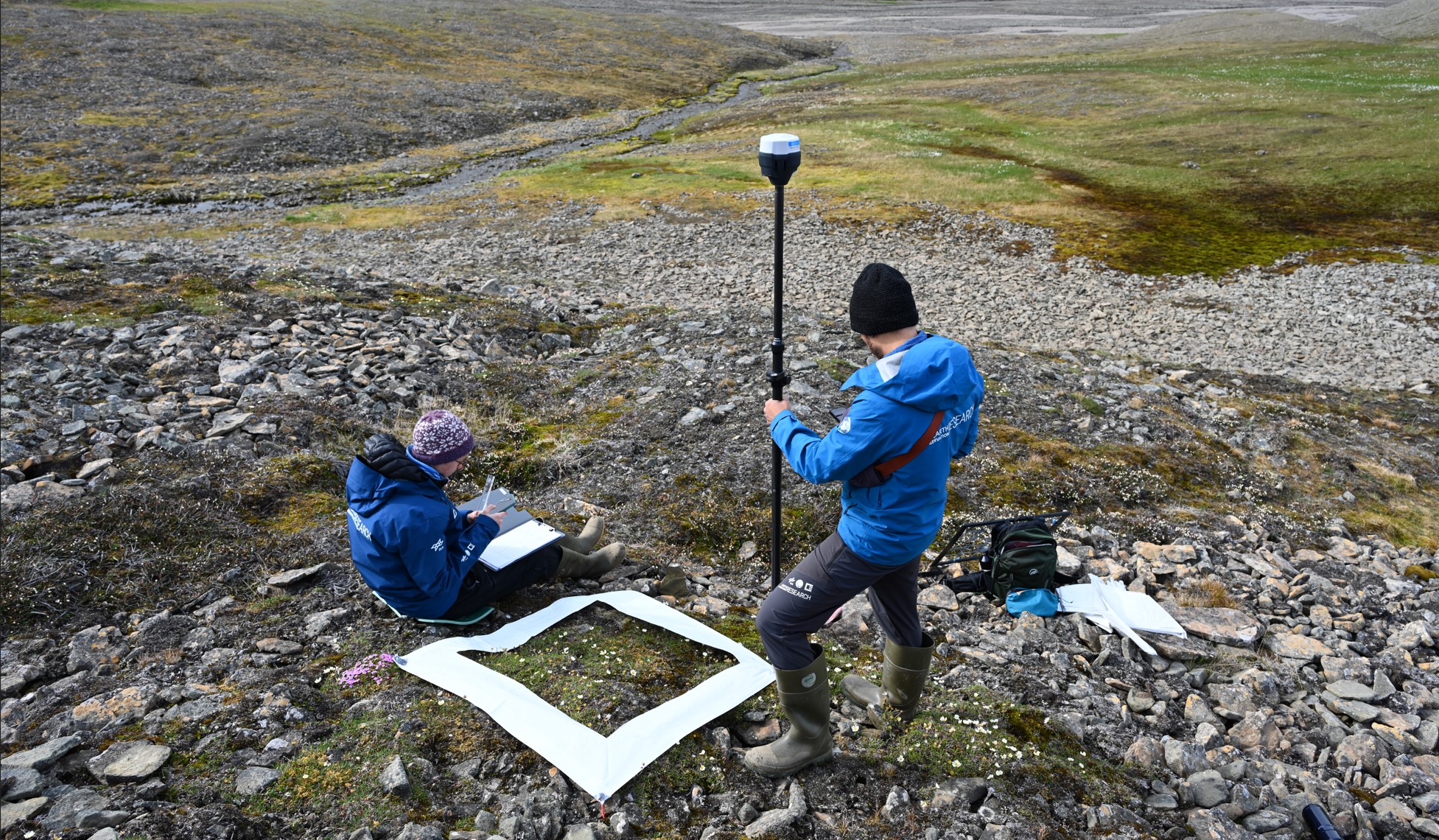
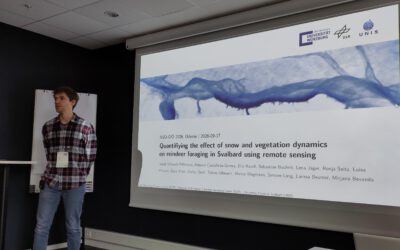
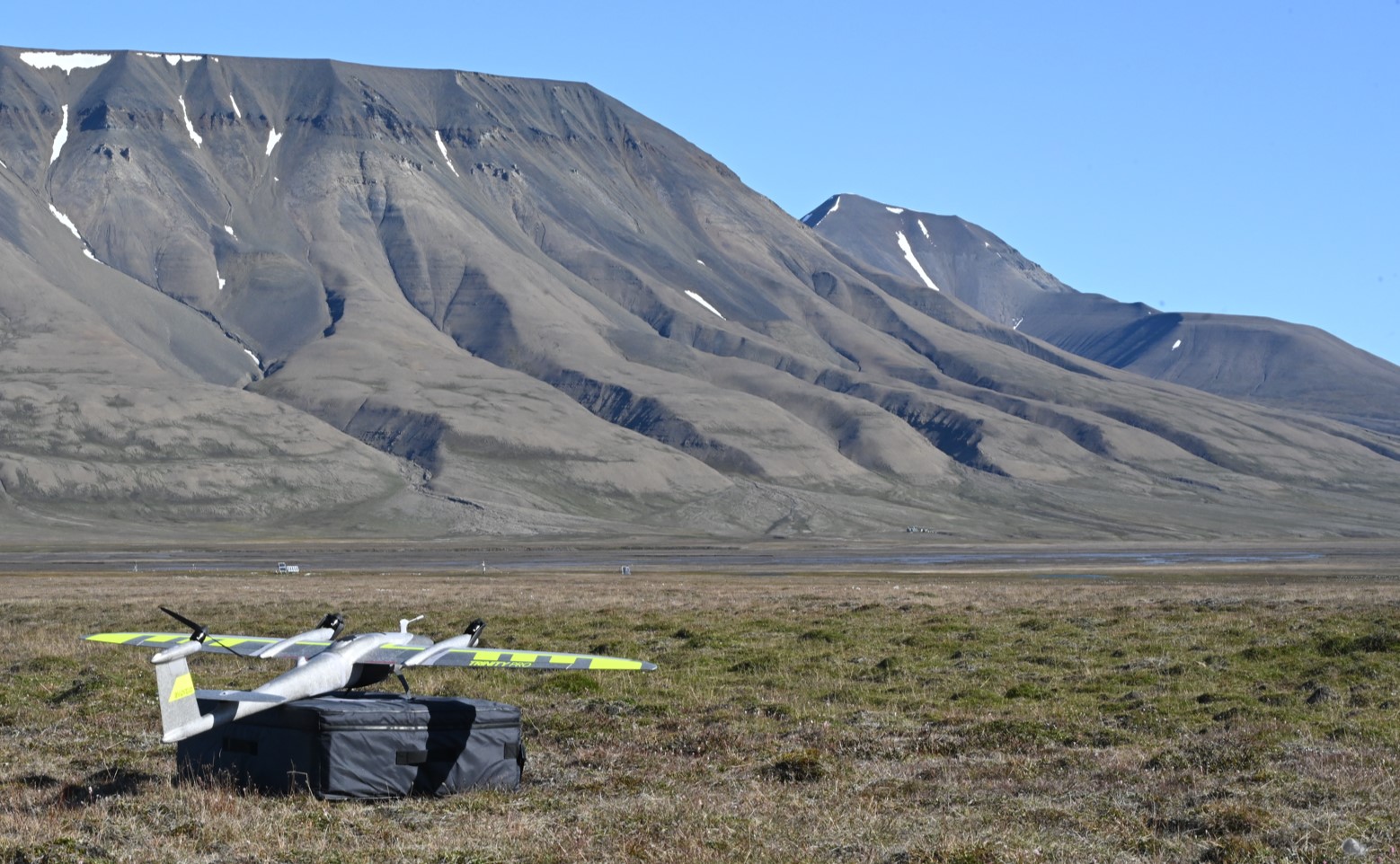
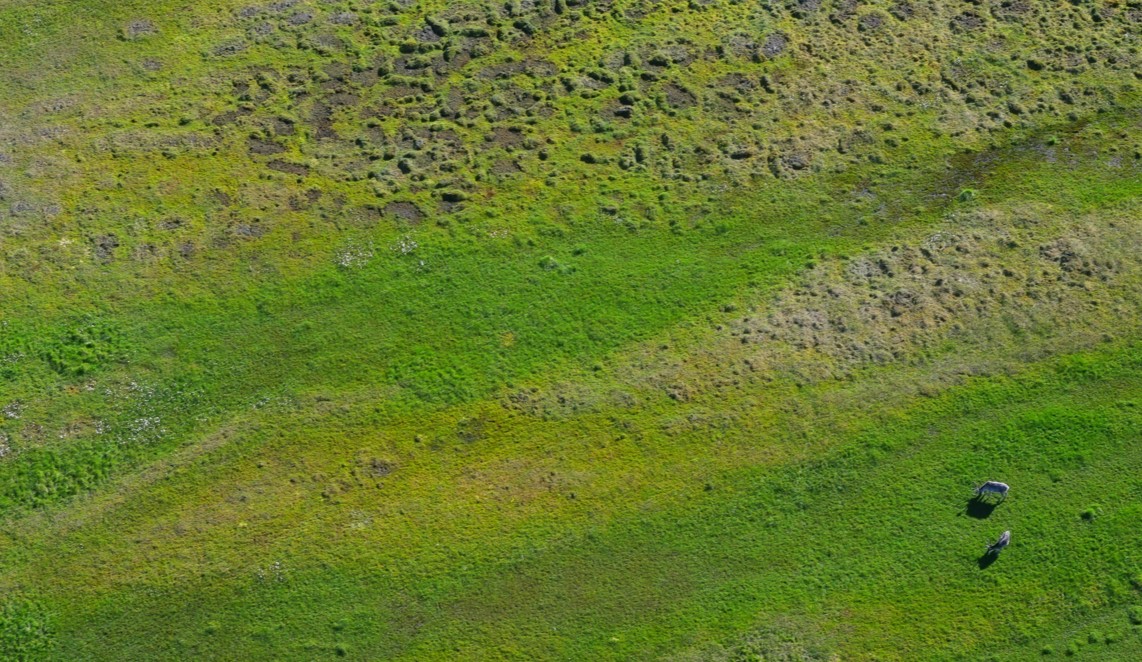
This summer our PhD student Elio Rauth, supported by our PhD student Antonio Castañeda and under the supervision of Dr. Mirjana Bevanda in cooperation with Prof. Larissa Beumer and Prof. Simone Lang conducted field work in Svalbard to investigate snow-vegetation interaction in the Arctic. The UAS team conducted three weeks of field work in the Arctic during the midnight sun. Beside conducting field work in Svalbard to collect data for analysing snow-vegetation interactions in the Arctic. The team used drones with LiDAR, oblique, and multispectral sensors to create high-resolution elevation models, multispectral landscape maps and orthomosaics. The data will be used to map the small-scale vegetation and snow accumulation patterns for linking it to the species-environment and vegetation research conducted by our collaborators. During the field work, the team also collected ground truth data from vegetation plots, for which they analyzed plant species composition and measured soil moisture and temperature. They learned a lot about the flora of Svalbard, polar bear safety, and how to plan drone flights in often unpredictable Arctic weather conditions.
follow us and share it on:

you may also like:

Advancing Agriculture with UAS Multi-Sensor Research

Advancing Agriculture with UAS Multi-Sensor Research

Understanding how agriculture can adapt to a changing climate is one of the key challenges of our time. At EORC, we are pleased to share that our researchers are currently collaborating with the Bavarian State Research Center for Agriculture (LfL) on an innovative...

New roll-up shows Urban Collaboration and Research

New roll-up shows Urban Collaboration and Research

Remote sensing thrives on collaboration as shown (by a few selected ones) on our most recent roll-up. Many of today’s most pressing urban and environmental challenges—rapid urbanization, climate change, landcover change, migration, inequality, and economic...

Hackathon within the Super-Test-Site Project

Hackathon within the Super-Test-Site Project

What happens when researchers and developers sit down together to explore a multidisciplinary urban dataset? Our researchers from the EORC joined a hackathon that took place within the Super-Test-Site Project, organised by Prof. Dr. Gunther Gust from the Chair of...

Field Days in the Oberpfalz: Exploring FSME Hotspots

Field Days in the Oberpfalz: Exploring FSME Hotspots

On April 17th and 29th our researchers Sofía and Ariane had two field days in the areas around Amberg and Schwandorf, one of Germany's most well-known TBE (tick-borne encephalitis) risk regions. They joined Prof. Dr. Gerhard Dobler and Dr. Lidia Chitimia-Dobler from...

Johannes Mast has successfully defended his PhD Thesis

Johannes Mast has successfully defended his PhD Thesis

Johannes Mast defended his PhD Thesis titled "Geographical Migration Research using Remote Sensing and Social Media Data" at the Julius-Maximilians-University Würzburg successfully on the 29th of April 2026. We congratulate him very much for his...

Share This