At the Earth Observation Research Centre (EORC), our international EAGLE M.Sc. students take part in an intensive course on unmanned aerial systems (UAS), combining theoretical foundations with practical field experience. The course is designed to provide students with a comprehensive understanding of UAS-based research, preparing them to safely and effectively integrate airborne data acquisition into their scientific work.
The theoretical component introduces students to the regulatory framework governing UAS operations, an essential aspect of responsible research. Students learn about European legal regulations, airspace rules, and operational requirements, alongside key principles of risk assessment, hazard avoidance, and safety management. Mission planning is treated as a central skill: from defining scientific objectives and selecting appropriate flight parameters to anticipating environmental and logistical constraints.
A strong focus is placed on sensor systems and their scientific applications. The students are introduced to different payloads used in Earth observation, including optical and multispectral sensors, and discuss how sensor choice influences data quality and research outcomes. This technical knowledge is directly linked to methodological considerations in data acquisition and processing.
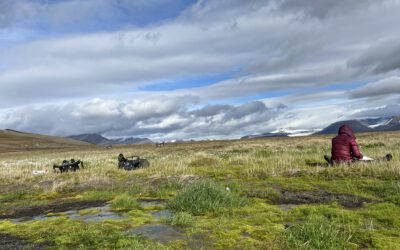
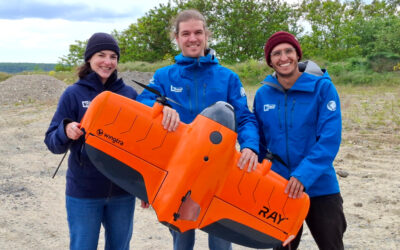
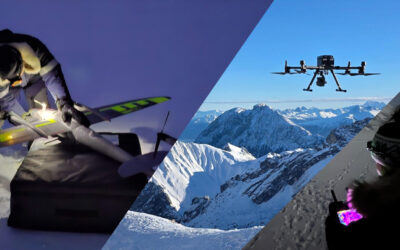
The practical sessions allow students to apply these concepts in the field using the EORC’s UAS platform. Under supervision, they participate in flight preparation, system checks, and real-world mission execution. This hands-on experience helps them understand operational workflows, teamwork in the field, and the importance of safety protocols in dynamic environments. Practical data acquisition exercises provide insight into the full research chain — from planning to data capture — reinforcing the connection between theory and application.
The course is made possible by the dedicated work of the EORC UAS research team, including among others Antonio, Luisa, Jakob, and Mirjana, who guide the students through both technical and scientific aspects of UAS operations. Their expertise ensures that the training reflects current best practices in airborne Earth observation.
By the end of the course, students gain not only technical competence but also confidence in designing and conducting UAS-supported research. The combination of legal awareness, methodological training, and practical experience equips them with skills that are increasingly relevant across many fields of environmental science.
picture courtesy of Rezna Gauro
The theoretical component introduces students to the regulatory framework governing UAS operations, an essential aspect of responsible research. Students learn about European legal regulations, airspace rules, and operational requirements, alongside key principles of risk assessment, hazard avoidance, and safety management. Mission planning is treated as a central skill: from defining scientific objectives and selecting appropriate flight parameters to anticipating environmental and logistical constraints.
A strong focus is placed on sensor systems and their scientific applications. The students are introduced to different payloads used in Earth observation, including optical and multispectral sensors, and discuss how sensor choice influences data quality and research outcomes. This technical knowledge is directly linked to methodological considerations in data acquisition and processing.
The practical sessions allow students to apply these concepts in the field using the EORC’s UAS platform. Under supervision, they participate in flight preparation, system checks, and real-world mission execution. This hands-on experience helps them understand operational workflows, teamwork in the field, and the importance of safety protocols in dynamic environments. Practical data acquisition exercises provide insight into the full research chain — from planning to data capture — reinforcing the connection between theory and application.
The course is made possible by the dedicated work of the EORC UAS research team, including among others Antonio, Luisa, Jakob, and Mirjana, who guide the students through both technical and scientific aspects of UAS operations. Their expertise ensures that the training reflects current best practices in airborne Earth observation.
By the end of the course, students gain not only technical competence but also confidence in designing and conducting UAS-supported research. The combination of legal awareness, methodological training, and practical experience equips them with skills that are increasingly relevant across many fields of environmental science.
picture courtesy of Rezna Gauro