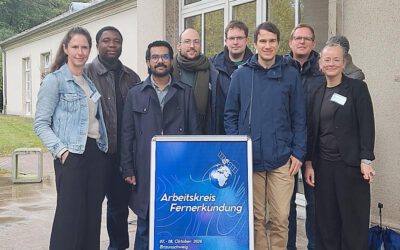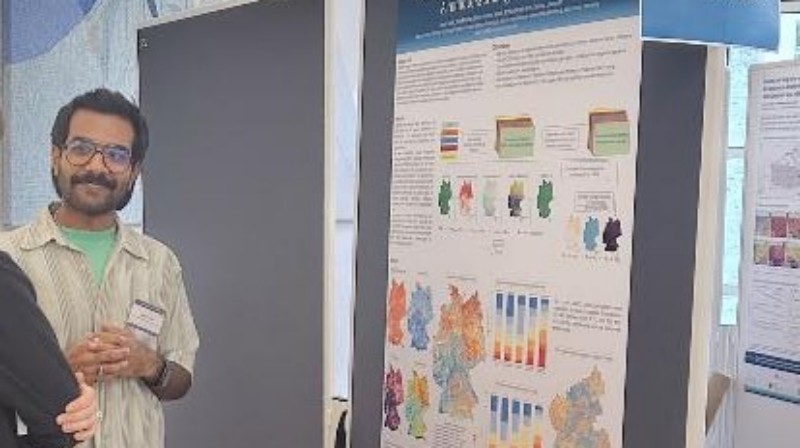

How do ecosystems respond to climate change, and where are they particularly vulnerable? At the 2026 annual meeting of the German Working Group on Remote Sensing (AK Fernerkundung), hosted by the Thünen Institute in Braunschweig, Basil Tufail from the Earth Observation Research Cluster (EORC) at Julius-Maximilians-Universität Würzburg presented research addressing these questions.
Climate change is affecting vegetation across Germany, but ecosystems respond differently. While some areas show declining stability and reduced capacity to recover from climatic disturbances, others remain comparatively resilient. Understanding these differences is essential for identifying regions of ecological concern and supporting climate adaptation, biodiversity conservation, and sustainable land management.
The presented research provides a nationwide assessment of vegetation sensitivity, resilience, climate exposure, and vulnerability, drawing on 25 years of satellite observations and climate records. A regional application in Rhineland-Palatinate demonstrates the potential for more detailed assessments relevant to ecosystem and protected-area management.
The findings reveal distinct spatial patterns and differences between land-cover types. Forests are predominantly associated with more stable and buffered conditions, while agricultural areas show a greater share of vegetation responses indicating vulnerability to climate variability and change.
The work highlights how Earth observation can contribute to identifying climate-sensitive ecosystems and supporting targeted conservation and adaptation strategies.
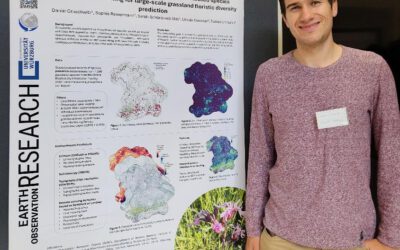
The poster, entitled “Mapping ecosystem sensitivity, resilience, climate exposure, and vulnerability across Germany: A remote-sensing framework”, was jointly authored by Basil Tufail, Jule Pfeiffer, Linus Müller, Sarah Schönbrodt-Stitt, and Tobias Ullmann from the Earth Observation Research Cluster (EORC), Julius-Maximilians-Universität Würzburg.
The research was funded by Landesforsten Rheinland-Pfalz.
For further information on the meeting, please visit the AK Fernerkundung 2026 program.