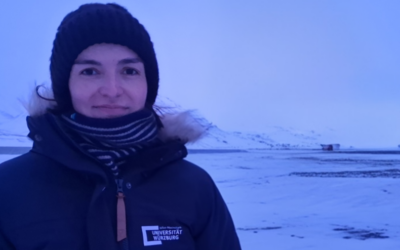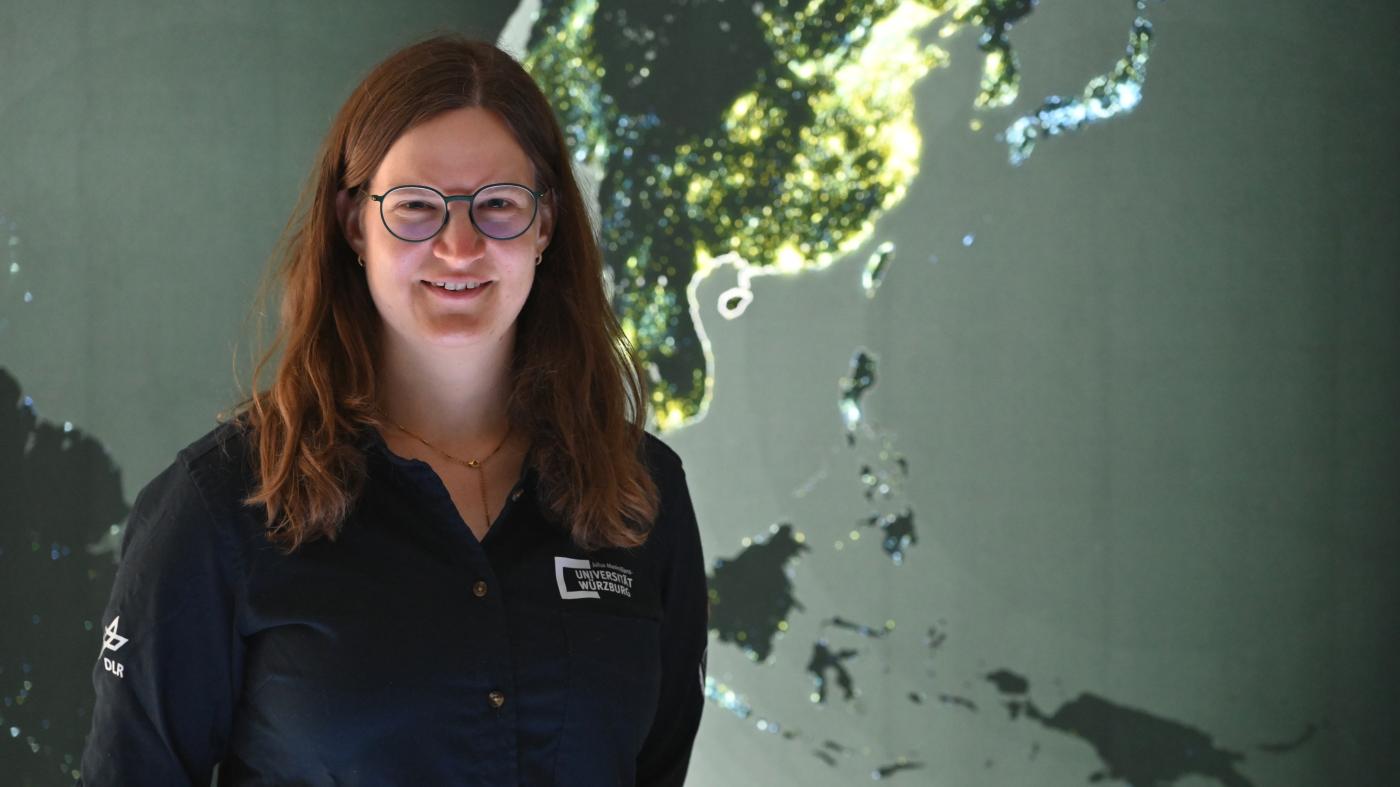

Ariane Droin loves teaching. That much is obvious if you’ve ever sat in one of her classes. She holds two Master’s degrees, one in Applied Physical Geography and Mountain Research and one in Geospatial Technologies from the University of Graz. Along the way she sat through a lot of courses herself, good ones and bad ones, and that experience shaped her view of how teaching should be conducted. Her goal is to get every student to the same level, not just in terms of knowledge, but also in how they work together. For her, the best results are gained when people support each other rather than compete.
At EAGLE, she’s become one of the people students go to for spatial programming. It’s the course where people show up never having written a line of R and leave being able to write their own R-Package. She still remembers her own first programming course where she was completely lost and did not understand a word of that new language. That is why Ariane knows how important it is to make people understand the syntax of programming, which is why she focusses a lot of her energy on the fact that the students really understand what they are doing. Besides programming, she also teaches urban EO applications, which lines up with her own research interests. Furthermore, she’s been involved in the courses that teach soft skills: for example scientific presentations or scientific graphs. Those are things that turn out to matter a lot once students are out doing fieldwork or job hunting.
This semester she’s working on something interesting with the UAS research team: a thermal time series over urban areas. Drone-mounted thermal sensors fly from before dawn until after sunset, taking measurements every 60 minutes. The idea is to compare the measured temperature from the drone with ground-based temperature sensors placed on different surface materials, and to see how their temperature-curve over the day evolves.