
Remote sensing is opening new windows into some of the most remote and rapidly changing environments on Earth. A recent feature by Research in Bavaria highlights how researchers from our EORC and colleagues from UNIS are using cutting-edge Earth observation technologies to study the Arctic and better understand the impacts of climate change.
Exploring the Arctic from Above
The Arctic is warming faster than almost any other region on the planet, making it a crucial natural laboratory for studying environmental change. Satellite data, drones, and ground-based sensors now allow scientists to observe these fragile ecosystems at multiple scales—from local snow properties to regional landscape dynamics.
At the Earth Observation Research Cluster (EORC) at the University of Würzburg, researchers combine satellite imagery, uncrewed aerial systems (UAS), and field measurements to analyse Arctic environments. These approaches make it possible to monitor snow cover, permafrost processes, vegetation change, and ecosystem dynamics across large areas that are otherwise extremely difficult to access. Remote sensing is particularly valuable in polar regions because it provides consistent observations across vast and remote landscapes where traditional field measurements are limited.
Fieldwork in Svalbard
Much of this research takes place on Svalbard, a Norwegian archipelago in the High Arctic. Scientists and students conduct field campaigns there to collect high-resolution data and test new sensing technologies under real-world conditions.
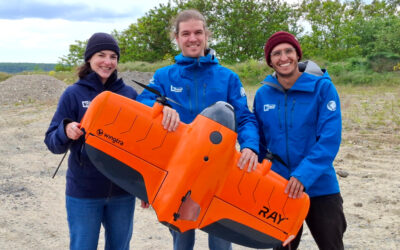
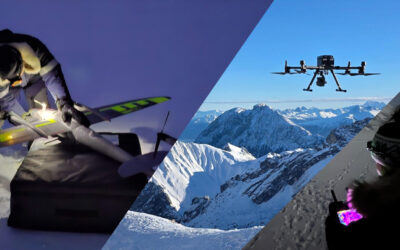
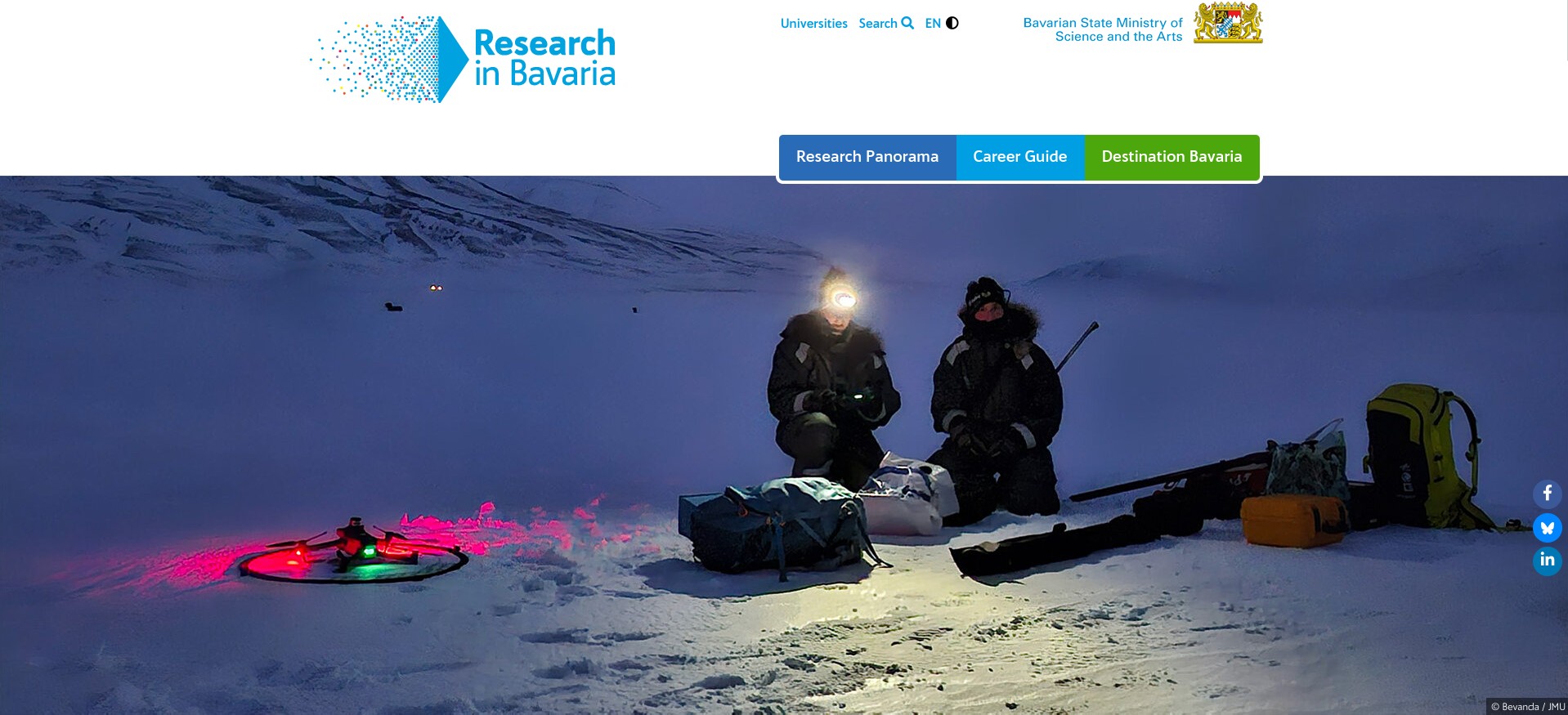
Researchers such as Prof. Tobias Ullmann, Dr. Mirjana Bevanda and Dr. Jakob Schwalb-Willmann work with international partners and the University Centre in Svalbard (UNIS) to investigate Arctic snow and ice dynamics. Using drones equipped with LiDAR, multispectral, and thermal sensors, the team can capture detailed spatial information about snow cover and environmental conditions across large areas. These data help scientists better understand processes such as snow accumulation, melt patterns, and ecological interactions in polar environments.
Training the Next Generation of Arctic Scientists
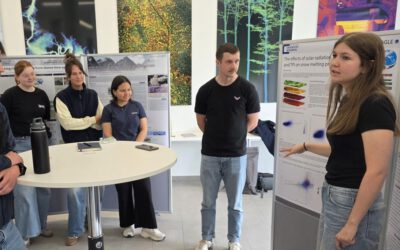
The Arctic research activities are also closely linked to the international EAGLE MSc program in Earth Observation. Students gain hands-on experience through field campaigns and internships in Svalbard, where they collect time-series data and apply remote sensing methods to real ecological research questions.
Working under Arctic conditions can be both challenging and rewarding. Students often spend months in the field collecting data during the polar night and summer season, learning not only advanced Earth observation techniques but also the practical realities of field science in extreme environments.
These experiences provide valuable training for the next generation of scientists working at the intersection of remote sensing, ecology, and climate research.
Looking Ahead
As the Arctic continues to change rapidly, the importance of reliable environmental monitoring will only increase. By combining innovative Earth observation technologies with international collaboration and student involvement, the Würzburg research community is contributing important insights into Arctic ecosystems and their response to climate change.
The feature in Research in Bavaria highlights how interdisciplinary approaches—from satellite remote sensing to drone-based measurements—are helping researchers better understand one of the most sensitive regions of our planet.
➡️ Read the full feature:
https://www.research-in-bavaria.de/remote-sensing-in-the-arctic/