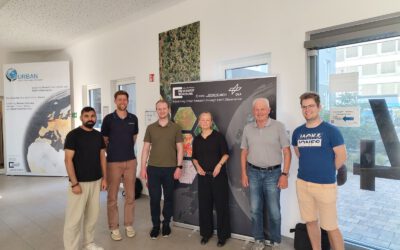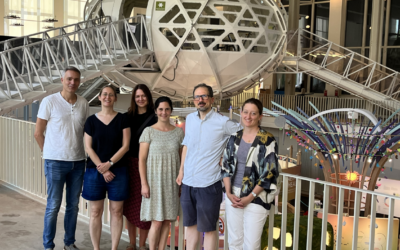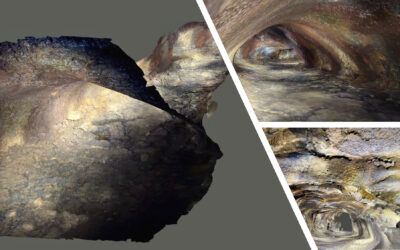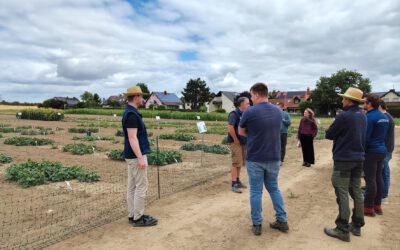

Every research group that’s ever bought a drone has a story about the first one it lost. We’re no different. So let’s just get that out of the way up front: this is the inside story of how UAS (Unoccupied Aerial System) research grew up at the Earth Observation Research Cluster.
The wild west years
If you’d walked into our UAS lab (a generous word for what used to be basically a shared office with some storage space piled up with Pelican cases) ten or so years back, you wouldn’t have found much of a system. People grabbed a Phantom, went out, and flew. No real protocol, no checklist, no second pair of eyes making sure everything was actually attached the way it was supposed to be.
And that’s exactly how we lost our only (first and last) UAS. Not because of bad weather or bad luck, but because somebody forgot to lock a rotor in place properly before take-off. It’s a dumb way to lose a drone, and it’s also a completely predictable one if nobody’s enforcing the basics.
But the missing checklist wasn’t even the biggest problem. The bigger issue was that nobody had really stopped to ask what all this flying was for. We had aircraft in the air and data piling up, but no clear scientific question driving any of it. And when you do manage to collect something useful, what happens next? At that point, we genuinely didn’t know. There was no storage structure, no processing pipeline, nothing. Data just sort of sat there, scattered across hard drives and laptops, waiting for someone to eventually figure out what to do with it.
Hitting the wall, and deciding to fix it properly
At some point you have to admit that enthusiasm alone doesn’t make research. So we made a call: before buying more sensors or planning more flights, we needed actual scientific use cases. Real questions that UAS data could answer better than any other method.
That sounds simple written down like that. It wasn’t. Defining good use cases takes time, it takes a lot of failed pitches, and it takes serious stamina because the payoff isn’t immediate. First we had to put an actual UAS research team in place, people whose job it was to own this instead of squeezing it in between other things. And then we had to bring collaborators from completely different disciplines on board and actually demonstrate, with real results, that UAS data was worth their time too. Ecologists, geographers, agricultural scientists, people studying snow and permafrost. Each of them needed to see their own value case before they’d trust the data. And we did: we found great collaborators from biology in the University forest, in the High Arctic, in Africa, but also from urban sciences, geomorphology, and many more disciplines.
Alongside that, we had to get the boring but absolutely essential stuff in order: fleet management so we actually know what aircraft we have and what condition they’re in, safety and security procedures so a forgotten rotor lock doesn’t bring a drone down again, and full compliance with the legal regulations that govern flying in European airspace, which have gotten a lot more detailed over the years. And once data actually comes back from a flight, we needed a clear answer for where it gets saved, how it gets processed, and who’s responsible for what.
None of that happened overnight. It took years. But it’s done now, and it shows.
What’s in the fleet today
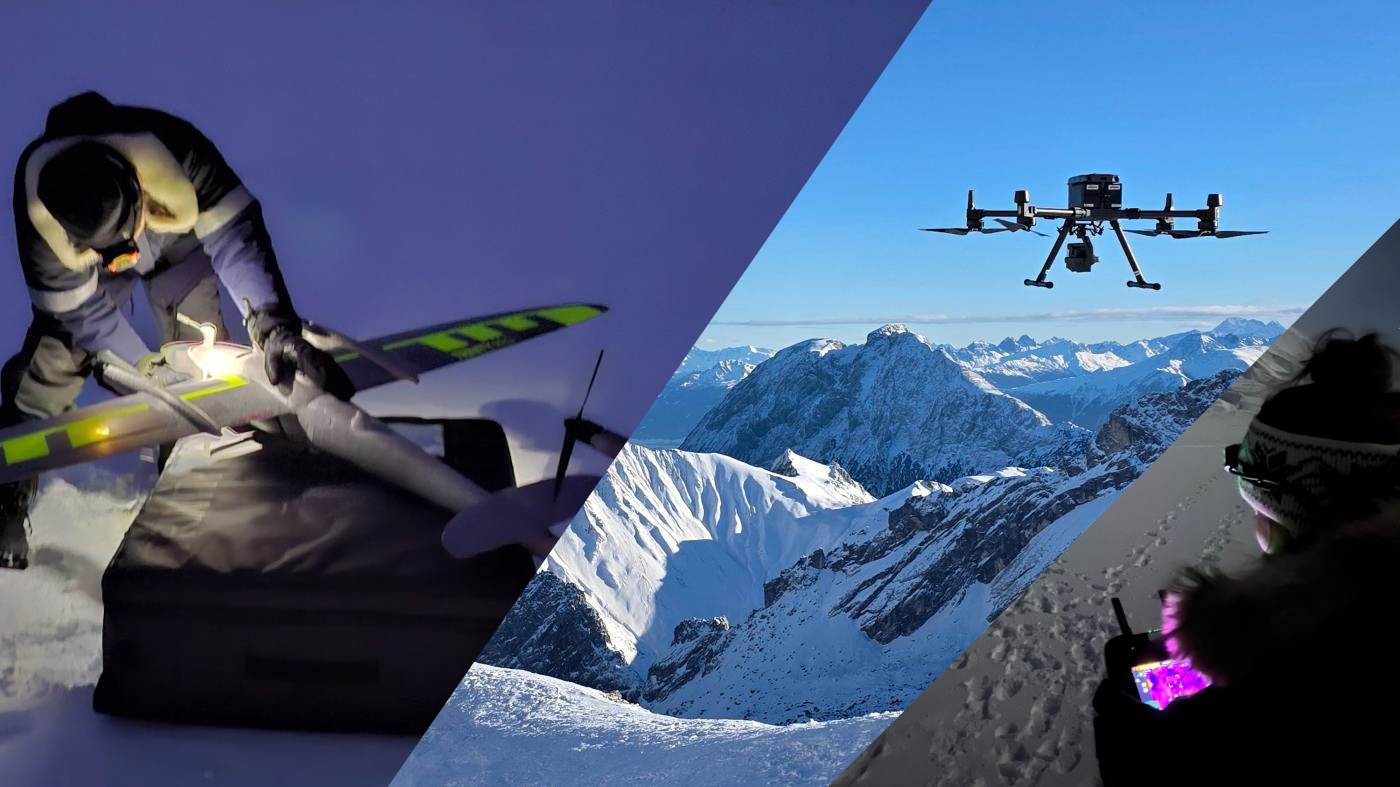
These days our UAS platforms carry serious sensor payloads, not just an onboard camera and good intentions. The fleet itself has grown into a proper mix: VTOLs like the Wingtra for big-area mapping jobs, and a line of copters running from the Mavic 3 and 4 up through the M350 to the M600, each set up with its own multi-sensor payload depending on the mission and the research question. Our UAS team is currently active in projects across Germany as well as other sites in Europe, but also in Africa, and the Arctic, often running several research projects in parallel.
Take our M600 system as an example. It flies with a Headwall Nano HP VNIR hyperspectral imager paired with an onboard LiDAR unit, mounted on a Gremsy H16 V2 gimbal, and we use that setup for agricultural analysis tied to climate change research. That combination lets us capture detailed spectral information about vegetation health alongside precise structural data of the same scene, which is exactly what you need when you’re trying to spot stress in a forest canopy or a field of crops before it’s visible to the naked eye.
We are currently running a multi-sensor approach with multispectral and hyperspectral cameras on UAS platforms for agricultural research, in a joint project with the Bavarian State Research Center for Agriculture looking at how different farming practices hold up under shifting climate conditions. Pairing those sensors with ground measurements gets us at plant health, water stress, and biomass in a level of detail satellite data just can’t match at field scale.
Where we actually fly
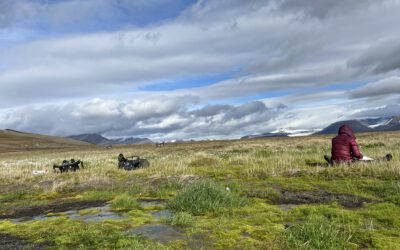
Up in the High Arctic, on Svalbard, we’ve used VTOL and copter UAS to map snow depth, surface temperature and vegetation for Arctic ecology research, work that feeds directly into understanding how snowpack changes affect vegetation and wildlife through the seasons. Fieldwork on snow and ice properties has turned into a proper time series by now, with repeated campaigns in various valleys. That expertise has led to guest lectures on drone remote sensing for Arctic biology and remote sensing for the cryosphere. EAGLE MSc students doing fieldwork on Svalbard is just standard practice for us now. We were running similar analyses up in Alaska and northern Canada, and currently also at high altitude field stations like Schneefernerhaus, where we’ve collected large scale landcover and especially snow property data.
In Ghana, UAS imagery has supported biodiversity training and conservation work around wildlife sanctuaries, connecting aerial data collection with on the ground ecological questions. We’ve got UAS flying for georisk assessment on various Franconian projects, and as part of a project tracking how fire and drought drive tree mortality in African savanna ecosystems with partners at the University of Bayreuth, we’ve covered active fires with three UAS running thermal sensors in parallel, backed up by pre and post-fire LiDAR and multispectral measurements.
And we’ve taken UAS into cities too, looking at thermal variability and urban structure with LiDAR, thermal and mulitspectral data. Urban areas are a different kind of headache legally, airspace is more crowded and the regulations get stricter fast, but we’ve worked out how to operate there safe as well.
Training is part of the equipment story too. Our EAGLE M.Sc. students go through a full UAS course covering the legal framework, risk assessment, mission planning, and the actual mechanics of flying and processing payload data. The same rigor we had to build for ourselves the hard way is now something we teach from day one.
Where it all gets put to use
This is the part that makes the whole slow buildup worth it. UAS research isn’t a side project anymore, it’s woven into a lot of what EORC does. Our UAS team has put a genuinely rigorous structure in place: who’s flying which aircraft, with what sensor, under what conditions, and exactly how and where that data gets transferred, stored, and processed afterward. They’ve even built their own open-source processing scripts to replace some of the clunkier proprietary software packages, which has made the whole pipeline faster and a lot less painful to work with.
Now that the heavy lifting of building the basics is mostly behind us, the team is running into a different kind of problem: success. Demand for missions keeps climbing, the data they’ve collected is genuinely good and they’re in the middle of publishing it, and meanwhile more research projects keep showing up wanting their time. It’s a good problem to have, but it’s still a problem. Add to that ongoing calibration and validation work alongside various environmental mapping efforts, and you start to see the pattern. UAS data shows up wherever a question needs resolution at a scale satellites can’t give you and ground surveys can’t cover fast enough.
We didn’t get here by being clever from the start. We got here by failing a few times, admitting it, and then doing the unglamorous work of building something that actually holds up. It’s not the kind of work that pays off in the short term, but it’s the foundation that innovative Earth observation research actually needs. None of it would have happened without a UAS team with a lot of stamina, and more than a few very dedicated EAGLE students who showed up for campaign after campaign.
If you want to get in touch with our UAS research team, please approach Dr. Mirjana Bevanda, Dr. Jakob Schwalb-Willmann or Antonio Castaneda-Gomez.