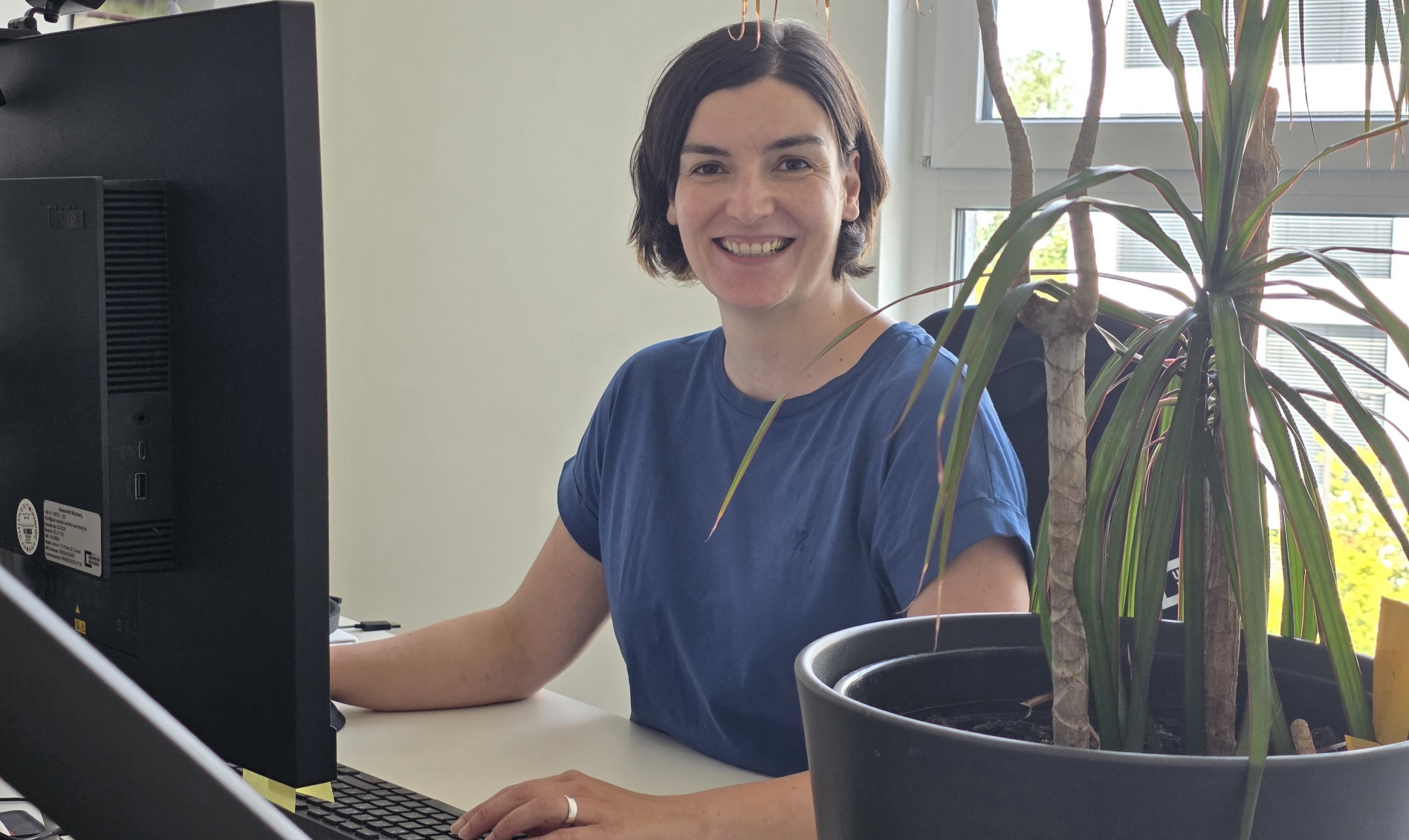

At the Earth Observation Research Cluster (EORC), many projects bridge ecological research with Earth observation technologies. One researcher working at this interface is Mirjana Bevanda, whose work focuses on using remote sensing and spatial analysis to better understand ecosystems, biodiversity, and environmental change.
Mirjana is a senior postdoctoral researcher at EORC, contributing to projects that explore how Earth observation can advance ecological research. Her academic background reflects this interdisciplinary perspective. She completed her PhD at the University of Bayreuth, where she investigated spatio-temporal animal movement patterns by combining ecological theory with remote sensing and spatial analysis using tools such as R and Python. Her work integrates remote sensing and ecological modelling to investigate patterns of biodiversity, landscape dynamics and animal-environment interactions.
Building on her interdisciplinary background, Mirjana joined the Department of Remote Sensing at the University of Würzburg in 2020 as a postdoctoral researcher through the WASCAL-DE-Coop project. This was the first step in a broader research journey at EORC. In the years that followed, she initiated and developed a new research focus on UAS-based Earth observation building the necessary infrastructure, workflows, and collaborations to make multi-sensor drone data a powerful tool for ecological research. What initially appeared to be a straightforward task quickly proved to be a long-term effort to establish a comprehensive UAS research framework. Building a functioning research infrastructure meant organizing flight operations, establishing mission planning strategies, setting up standardized data acquisition protocols, and creating robust systems for data storage and management, while also pushing for processing pipelines for LiDAR, thermal, and multispectral data. Recognizing that drones are only a tool and that their true value lies in the scientific questions they enable, she focused on building collaborations and expanding applications across diverse research areas. This approach opened new research directions, ranging from snow and landscape monitoring in Arctic environments to fire, vegetation, and ecosystem studies in savanna landscapes.Together with colleagues, including Antonio and Jakob, she played a key role in establishing UAS-based Earth observation at EORC, creating a foundation that now supports diverse research applications across biodiversity monitoring, ecosystem analysis, snow, and environmental research. Beyond developing the technical capabilities, she has shaped new scientific applications, including animal path mapping, snow depth mapping, and multi-sensor UAS time series in the University of Würzburg’s research forest, while establishing and expanding collaborations in Arctic and African environments. Also agricultural landscape mapping with hyperspectral UAS system together with her colleague Sarah is pursued to provide research on that topic beside health related topics with Ariane and Sofia or urban thermal analysis with Antonio.
The development of drone-based snow and vegetation mapping in Svalbard is one important milestone. What began as an exploratory fieldwork on snow and ice properties followed by many discussions has turned into an established research activity with recurring annual presence: joint campaigns in Adventdalen, Bjørndalen, and Reindalen, guest lectures on drone remote sensing, and MSc student projects have become integral parts of this research direction. Through these efforts, a new collaborative research network around UAS-based Arctic Earth observation has been established.
The collaboration with Kruger National Park is another important component of her research activities. What started as an initial collaboration with SANParks has grown into a partnership over the years investigating fire and drought impacts, savanna vegetation structure, environmental change, and animal movement patterns. The collaboration has expanded beyond individual projects, creating opportunities for EAGLE student internships and providing a foundation for current and future doctoral research.
Besides leading UAS-based research activities, Mirjana coordinates several research projects, including a DFG-funded project investigating drought and fire impacts, as well as the BigData and EcoGlob projects. By linking ecological questions with innovative Earth observation approaches across environments ragning from Bavaria to the Arctic and African savannas her work demonstrates how UAS technologies can advance biodiversity research and open new perspectives for environmental monitoring.